Preparing the Next Generation of Peacemakers
As she visits with families who are considering Sioux Falls Lutheran School for their child’s education, Preschool Director Brenda Bernard always shares that conflict is an inevitable part of life at every age. Children experience it on the playground. Friends experience it in their relationships. Siblings experience it at home. Adults experience it in their workplaces, churches, families, and communities.
At Sioux Falls Lutheran School, we believe students can be prepared for those moments.
That preparation begins by teaching students not simply how to avoid conflict, but how to navigate it in ways that reflect their identity as children of God. Through PeaceWise, SFLS is cultivating a school-wide culture of peacemaking that equips students with practical strategies, a shared language, and a biblical foundation for working through conflict and rebuilding relationships.
Watch the video below to see how PeaceWise has become part of the culture at Sioux Falls Lutheran School.
Building a Culture of Peacemaking
When SFLS made the commitment to incorporate PeaceWise into the school, the goal was bigger than adding another curriculum to the Bible classroom.
“We knew that we wanted to take this training well beyond our students into our community and into our staff,” Mrs. Bernard said. “We are modeling for students how to utilize the skills that they’re learning in the PeaceWise lessons with their actual relationships in the school.”
The formal PeaceWise curriculum is incorporated into Bible classes from five-year-old preschool through eighth grade, but its influence extends throughout the school. Teachers and staff at every level are trained in the PeaceWise model so that students encounter consistent language and strategies as they learn, practice, and apply the skills in real-life situations.
That process begins with the youngest students.
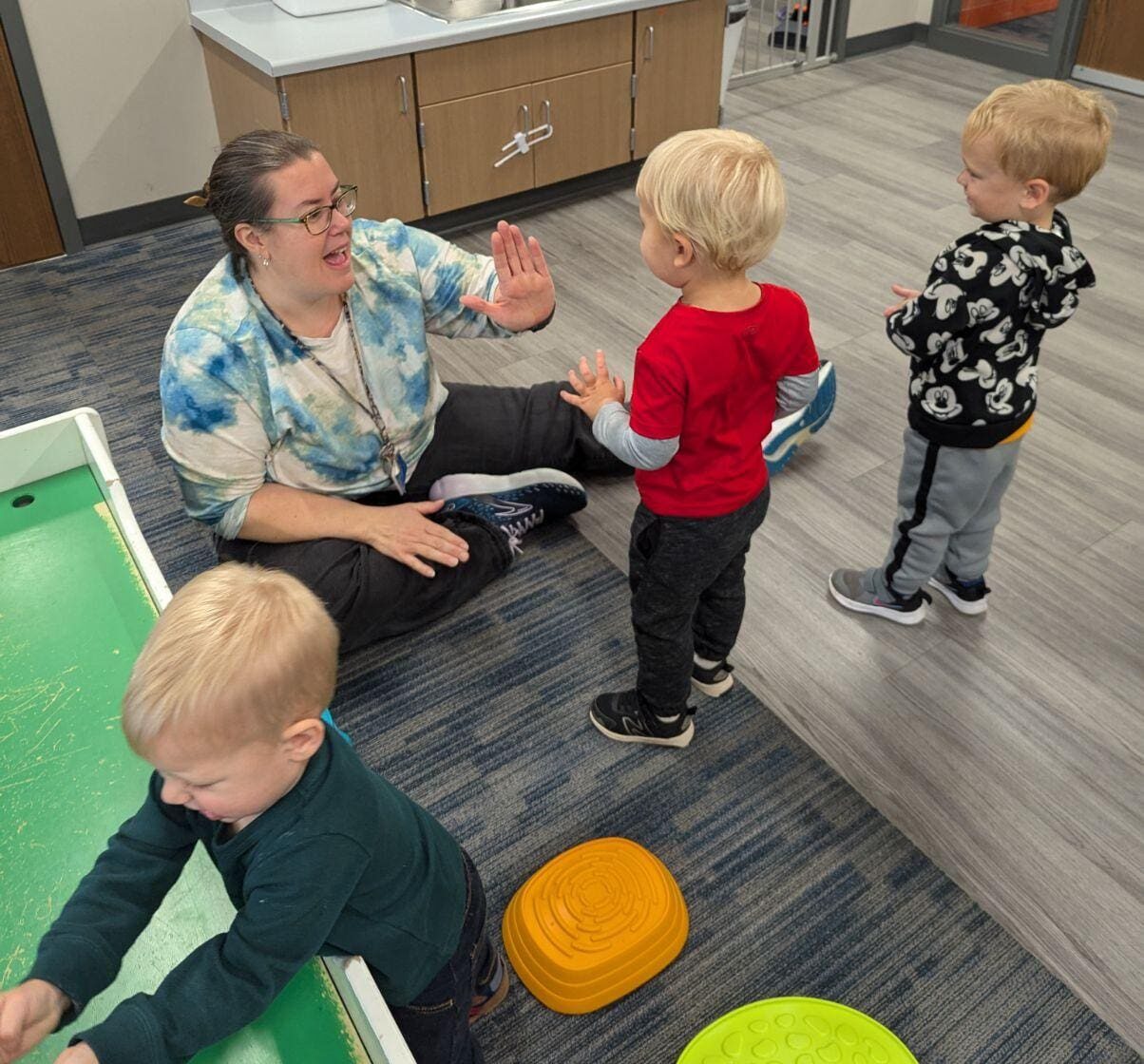
Preschool teachers who work with children from infancy through age five receive training in the PeaceWise model and use its language and strategies as young children encounter conflict.
When two toddlers reach for the same toy, for example, teachers don’t simply step in to solve the problem. They teach. The child who had the toy first might be encouraged to say, “My toy” or “No, thank you,” while the child waiting for a turn learns to say, “I want” or “My turn next.”
At the same time, teachers help children begin developing empathy. They might acknowledge the child who had the toy first while also helping them recognize that their friend is sad and asking, “What can we do to help?” With guidance, children begin learning to advocate for themselves while also considering the needs of others.
These may seem like small lessons, but they lay the foundation for skills that grow in complexity as students encounter new relationships and conflicts throughout their school years.
“The curriculum is very well written in that it adapts for the types of conflicts, the types of relationship challenges that students will have so that they are constantly learning and constantly being more successful in navigating those relationships as they get older,” Mrs. Bernard said.
Rooted in the Gospel
For SFLS, the biblical foundation of PeaceWise is essential.
“We are sinners who find our way into conflict just like the rest of the world,” Mrs. Bernard said. “And while we cannot avoid it, we can certainly prepare students to navigate conflict in a way that answers God’s call for Christians to serve the world as peacemakers.”
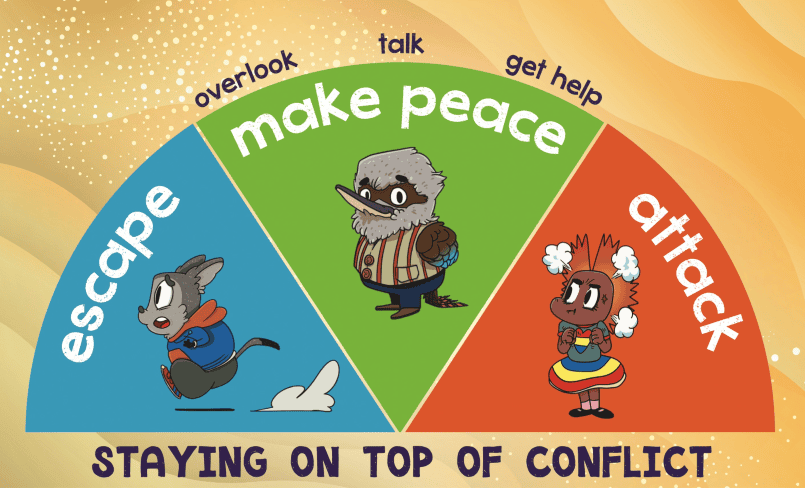
PeaceWise gives students a framework for understanding their natural responses to conflict and learning healthier ways to respond. One of the program’s foundational concepts is the “slippery slope,” which illustrates how people can respond to conflict by either attacking or escaping rather than moving toward reconciliation.
But the ultimate goal isn’t simply better communication or improved behavior.
“PeaceWise is unmistakably Christ-centered,” said Tia Esser, SFLS Executive Director.
At the heart of the approach are biblical principles that are central to the Christian faith: confession, forgiveness, reconciliation, and restoration.
“PeaceWise gives us that opportunity to know that we are saved by grace through faith,” said Mrs. Katie Mlnarik, a third grade teacher at SFLS. “And we know that using the PeaceWise program, they’ve really hit hard on that gospel and that even though we have conflict, we still get to confess, forgive, and we still get to reconcile with each other.”
From Conflict to Reconciliation
For some SFLS students, learning these skills has changed the way they think about conflict altogether.
“Before I learned about PeaceWiseKids there was a lot of fighting and arguing and we would never really resolve things,” said Chloe, an SFLS elementary student. “It would just kind of hang in the air.”
Logan, an SFLS high school student, noticed a similar change in the way students approach relationships after conflict.
“We usually just ended relationships. There wasn’t really much building back after there was a big argument or falling out,” Logan said. “But I feel like after PeaceWise, we had a way to start rebuilding that relationship.”
That rebuilding is exactly what teachers hope to see.
“When they go through their conflicts, we can guide them in the biblical direction,” Mrs. Mlnarik said. “But they’re more willing to go to that person and try it on their own.”
The progression is intentional. Adults provide guidance when students need it, but the ultimate goal is to help students develop the confidence and skills to navigate conflict independently.
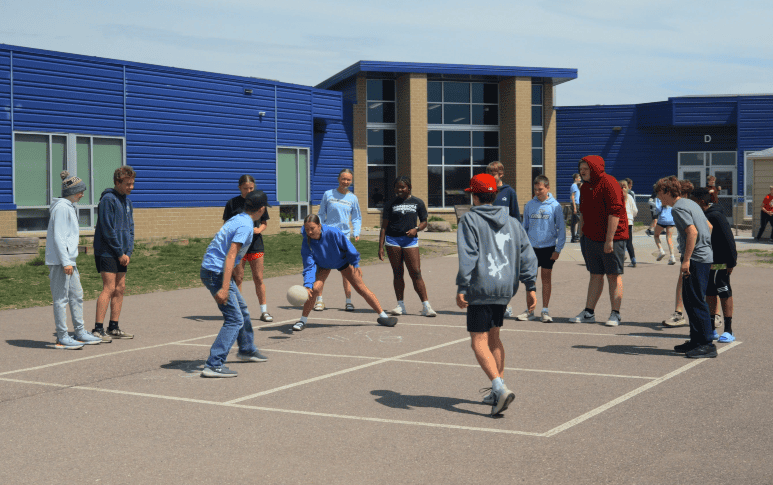
One example happened when a group of fourth grade students came in from recess after an argument during a game of four square. Mrs. Bernard gathered them together while emotions were still high and, using the PeaceWise approach, they began by “putting God at the table” and recognizing His presence and help in the situation.
Then came an important step–before talking about what someone else had done, each student had to take responsibility for his own part in the conflict.
“As we went around the table, we really didn’t talk about what you did,” Mrs. Bernard said. “They had the skills that had been taught to them in the classroom and began those apologies.”
When the conversation was finished, Mrs. Bernard asked the group whether there was anything else they needed to discuss.
Their answer?
“No, we really talked about it already.”
Learning to Be Peacemakers
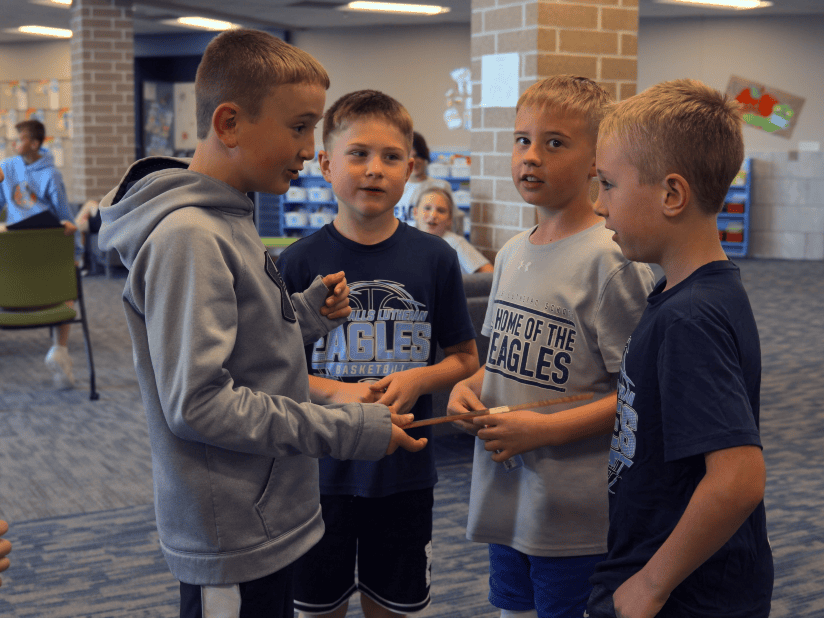
Students aren’t only learning how to resolve their own conflicts. The empathy they begin developing as young children also helps them recognize when others need help navigating conflict as they grow older.
Logan shared that he feels more confident trying to de-escalate situations in which people are being put down or made fun of before they become something bigger.
Another student, Ramsey, described using PeaceWise strategies with classmates during recess.
“If someone was fighting about a game, I would go up and say, ‘Let’s take a minute and figure out something that you both want to do,’” Ramsey said.
These are small moments, but they point toward something much bigger–our mission of developing capable Christian servant-leaders who are prepared not only to succeed academically, but also to navigate relationships and serve others in a complex world.
Peacemakers for Life
Ultimately, the hope is that what students learn at SFLS won’t stay at SFLS.
Conflict will follow them into college, careers, families, churches, and communities. The people and circumstances will change, but the need for wisdom, humility, forgiveness, and reconciliation will remain.
That is why SFLS sees PeaceWise as more than a curriculum.
“This is more than a classroom management program, more than a behavior response strategy,” Mrs. Bernard said. “It’s a way of living.”
And it ultimately points beyond the walls of the school.
“We want them to be prepared to see that we can take that opportunity and be wonderful disciples for Christ,” Mrs. Mlnarik said.
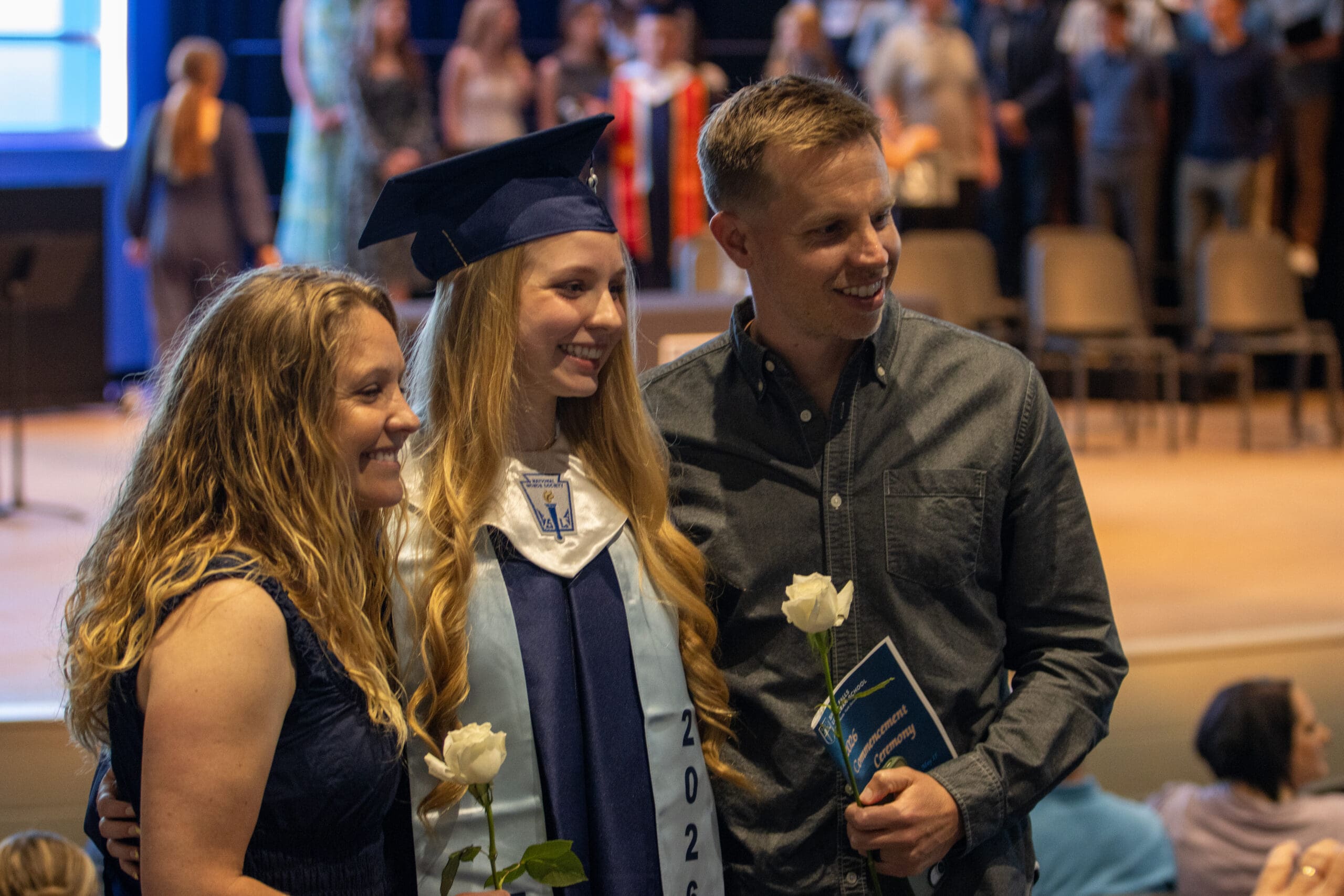
At Sioux Falls Lutheran School, preparing students for a complex world means preparing them for the reality of relationships—including the difficult ones. By teaching students to become peacemakers, SFLS is giving students skills they can carry throughout their lives and opportunities to put their faith into action in the way they treat others.
Because the world doesn’t just need people who want peace.
It needs peacemakers.
About Sioux Falls Lutheran School
Sioux Falls Lutheran School is a family community committed to developing capable Christian servant-leaders in a complex world who are World Ready and Faith Secure. We are passionate about giving our students the tools they need to be successful academically, socially, emotionally, and spiritually. We strive to accomplish this goal by maintaining high academic standards, employing excellent teachers, and upholding a Christian worldview drawn from Scripture. Ultimately, our vision is to partner with families in preparing children, as led by the Holy Spirit, for faithful and bold use of their God-given gifts to navigate and serve a complex world with the love of Christ.